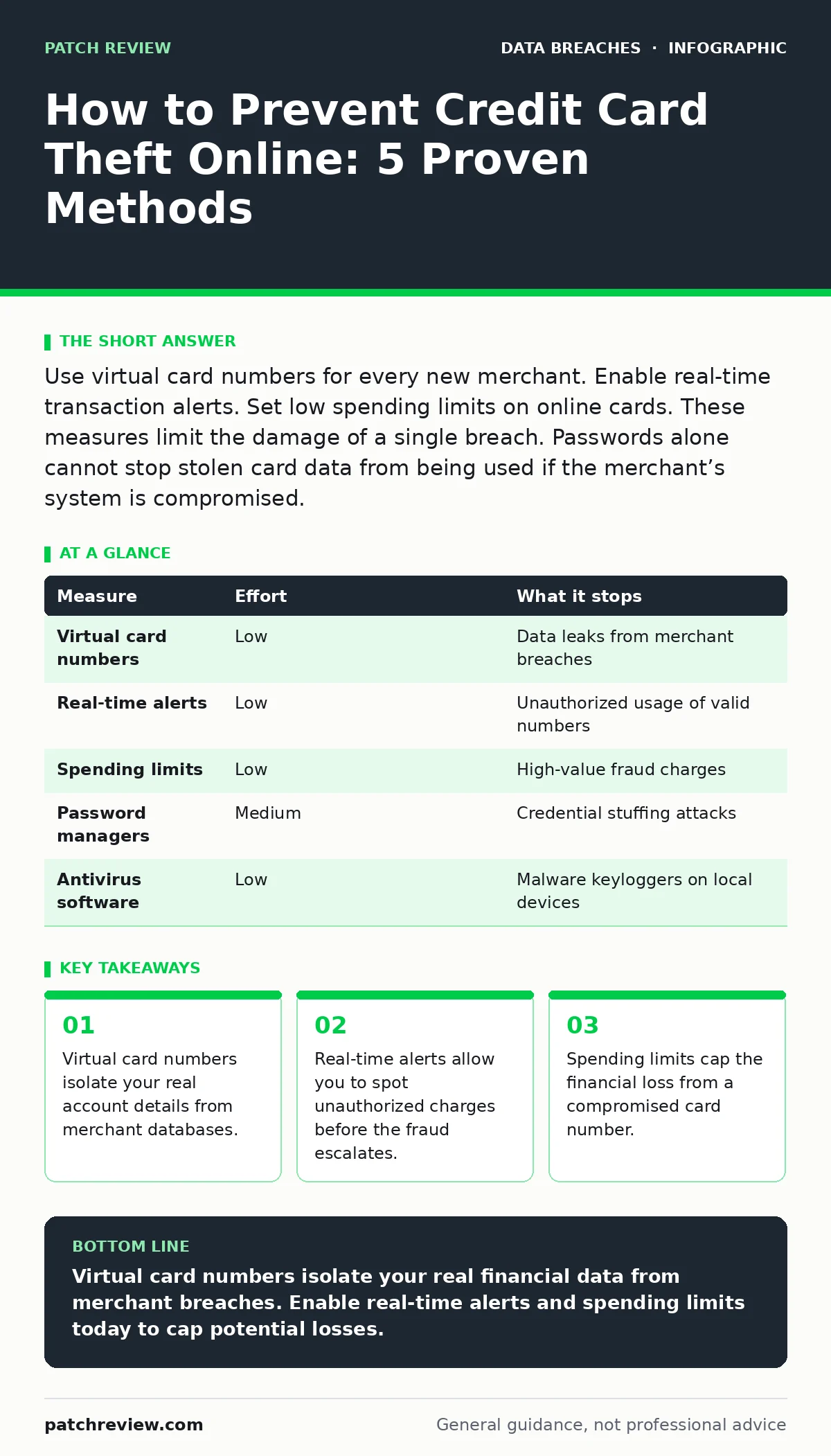
Use virtual card numbers for every new merchant. Enable real-time transaction alerts. Set low spending limits on online cards. These measures limit the damage of a single breach. Passwords alone cannot stop stolen card data from being used if the merchant’s system is compromised.
How to prevent credit card theft online
Preventing credit card theft online requires shifting focus from securing your device to limiting the value of the data merchants hold. Most people believe strong passwords are the primary defense. This is incorrect. If a merchant’s database is breached, your password is irrelevant. The attacker already has your card number, expiration date, and CVV code. Your goal is to ensure that stolen data cannot be used to charge your account.
The most effective strategy is to never give a merchant your actual primary card number. Instead, use virtual card numbers. These are temporary, unique digits linked to your real account. They can be set to expire after one use or a specific date. If a merchant leaks this data, the numbers are useless. This approach removes the incentive for attackers to target that specific merchant’s database.
Measure effectiveness and effort
You must weigh the effort of each measure against the risk it removes. Not all security steps are equal. Some provide high protection with minimal friction. Others require significant setup but offer only marginal gains.
| Measure | Effort | What it stops |
|---|---|---|
| Virtual card numbers | Low | Data leaks from merchant breaches |
| Real-time alerts | Low | Unauthorized usage of valid numbers |
| Spending limits | Low | High-value fraud charges |
| Password managers | Medium | Credential stuffing attacks |
| Antivirus software | Low | Malware keyloggers on local devices |
Virtual card numbers stop the problem at the source. They ensure that even if a merchant is negligent, your real financial data remains safe. Real-time alerts provide a safety net. They notify you the moment a transaction occurs. This allows you to cancel the card before further charges are processed.
The illusion of antivirus protection
Many users install antivirus software to prevent card theft. This is a common mistake. Antivirus tools scan for known malware signatures on your computer. They do not protect you when you type your card number into a legitimate website that later gets hacked. They also struggle with sophisticated banking trojans that hide in legitimate applications.
Imagine you shop at a popular electronics store. You use a secure connection and have updated antivirus. The store’s payment processor suffers a breach. Your card details are stolen. Your antivirus never detected anything because the threat originated on the merchant’s server, not your device. The theft occurred remotely. Your local defenses were bypassed entirely.
Virtual cards and spending limits
Virtual card numbers are your strongest defense. Most major banks and many fintech services offer this feature. You generate a unique card number for each merchant. You can set limits on these virtual cards. For example, you might set a limit equal to the exact purchase amount. Once the transaction clears, the card expires.
This method isolates your risk. If one merchant leaks data, only that specific virtual number is compromised. Your other purchases remain safe. You can revoke the virtual number without affecting your primary account. This creates a boundary between your financial identity and every online interaction.
Spending limits complement this strategy. Even if an attacker obtains a valid card number, they cannot charge large amounts. Setting a low daily limit on your online card reduces the potential loss. It forces attackers to move quickly, increasing the chance they will be caught by your alerts.
Real-time transaction alerts
Speed is critical in fraud prevention. By the time you review your monthly statement, significant damage may have occurred. Real-time alerts change this dynamic. Your bank sends a push notification or SMS for every transaction. You see the charge instantly.
If you do not recognize the merchant or the amount, you can cancel the card immediately. This stops further unauthorized charges. It also provides evidence for dispute claims. Banks prioritize disputes with clear, timely reporting. Delaying the report can complicate the recovery process.
Enable alerts for all transactions, not just large ones. Attackers often make small test charges to verify a card is active. These small charges are the warning signs. Ignoring them allows the attacker to proceed with larger purchases. Treat every alert as a potential threat until verified.
See also: Secure Data Disposal: FAQs on Sanitization and Media Destruction · Data Inventory and Mapping: How to Track What You Actually Have
What does not work alone
Several common measures are insufficient on their own. Password complexity is often overrated. A complex password protects your login, but not your card data if the merchant is breached. Two-factor authentication adds a layer of security for account access. It does not protect the card details stored in the merchant’s database.
Regular password changes are another ineffective habit. Changing passwords frequently does not protect against data breaches. If your card data is stolen, a new password does not invalidate the stolen numbers. Focus on measures that limit the value of the stolen data. Virtual cards and spending limits achieve this. Password hygiene is secondary.
Related security practices
Understanding broader data security principles helps you grasp why local measures fail. Data breaches often result from poor data retention policies. Merchants may store card data longer than necessary. This increases the window of exposure. Secure data disposal is equally important. When merchants delete data, they must ensure it is unrecoverable.
Third-party data breaches are a major vector. A merchant may be secure, but their payment processor or vendor may not. You cannot control the security of these third parties. This is why virtual cards are so effective. They limit your exposure to any single point of failure.
Data encryption protects data at rest and in transit. It makes stolen data harder to use. However, encryption is not a guarantee. If attackers obtain the encryption keys, the data is exposed. This is why encryption key management is critical for organizations. For consumers, relying on merchant encryption is a passive measure. You must assume it can fail.
See our guide on data encryption for more on how data is protected in transit. Understanding the HIPAA Security Rule can also provide insight into strict data handling standards, though it applies to health data. The principles of limiting access and monitoring usage are similar.
Checklist for today
You can implement these measures immediately. Start with the highest impact actions. These steps require minimal effort but significantly reduce your risk.
- Generate a virtual card number for your next online purchase.
- Enable real-time transaction alerts on your banking app.
- Set a low spending limit on your primary online card.
These actions create a layered defense. They protect you from merchant breaches, local malware, and unauthorized usage. Do not rely on a single measure. Combine virtual cards, alerts, and limits for maximum protection.
FAQ
Q: Can I use virtual cards for recurring subscriptions?
A: Yes, most banks allow you to create recurring virtual cards. These numbers remain valid for future charges but can be revoked if you cancel the subscription. This ensures the merchant cannot charge you after termination.
Q: Do virtual cards work for international purchases?
A: Most virtual cards work internationally, but some merchants may flag them as suspicious. Check with your bank to ensure international transactions are enabled for your virtual cards. Some banks allow you to toggle this feature.
Q: What if my bank does not offer virtual cards?
A: You can use third-party services that provide virtual card numbers. These services link to your existing bank account or credit card. They offer similar features, including expiration dates and spending limits. Compare fees and security features before choosing a provider.
Q: Are password managers enough to prevent card theft?
A: Password managers protect your login credentials. They do not protect your card data if a merchant is breached. Use password managers for account security, but rely on virtual cards and alerts for payment security. Both measures address different risks.
Key takeaways
- Virtual card numbers isolate your real account details from merchant databases.
- Real-time alerts allow you to spot unauthorized charges before the fraud escalates.
- Spending limits cap the financial loss from a compromised card number.
Virtual card numbers isolate your real financial data from merchant breaches. Enable real-time alerts and spending limits today to cap potential losses.
Frequently asked questions
Do virtual cards work for digital wallets?
Yes, you can add virtual card numbers to digital wallets. This allows you to use the security benefits of virtual cards with contactless payments. Ensure the virtual card is set to recurring if you plan to use it for regular transactions.
How do I dispute a fraudulent charge?
Contact your bank immediately. Provide the transaction details and any alerts you received. Your bank will initiate a dispute and may issue a temporary credit. Keep records of all communications. Follow up if the dispute is not resolved within the stated timeframe.
Can attackers bypass spending limits?
Attackers cannot bypass spending limits set by your bank. However, they may try multiple small transactions to stay under the limit. Real-time alerts help you detect this pattern. If you see multiple small charges, cancel the card immediately.
Is it safe to store card details in browser autofill?
Storing card details in browser autofill is risky. If your computer is compromised, attackers can access these details. Use a password manager with encryption instead. Or better yet, use virtual cards and never store the real number in any browser.
How this guide was produced: written by the Patch Review editorial team with AI assistance, checked against the public references listed below, and reviewed when the facts change. See our editorial policy or report an error.