
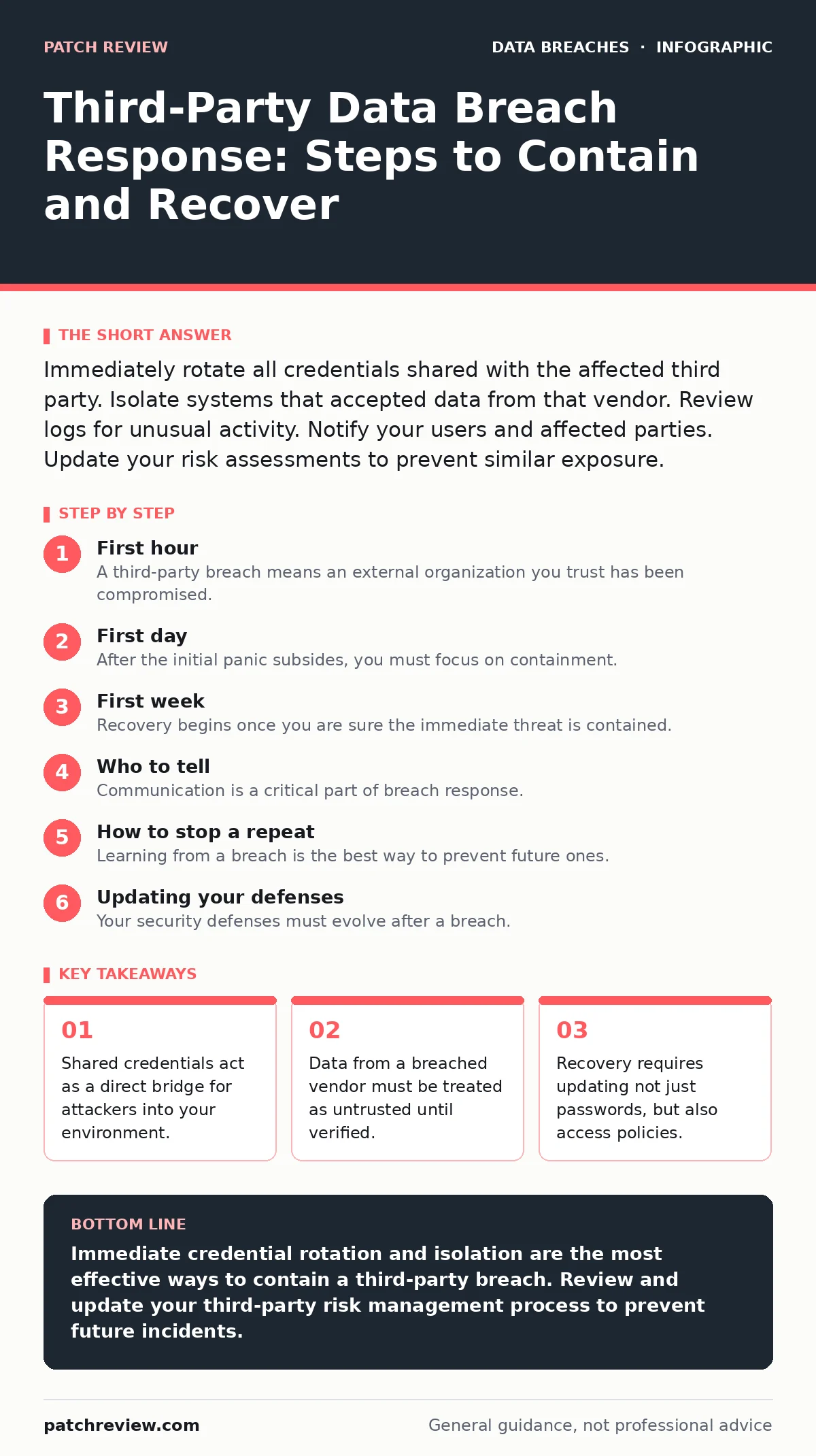
Immediately rotate all credentials shared with the affected third party. Isolate systems that accepted data from that vendor. Review logs for unusual activity. Notify your users and affected parties. Update your risk assessments to prevent similar exposure.
First hour
A third-party breach means an external organization you trust has been compromised. This often implies that data you shared with them is now exposed. It also suggests that any credentials or access tokens you gave them may be in the hands of an attacker. You must assume the worst-case scenario immediately. Do not wait for confirmation that your specific data was taken. The attacker may already be using stolen credentials to move laterally into your network.
You need to act fast to limit the damage. The following checklist covers the critical steps for the first sixty minutes.
- Identify all systems and accounts that interact with the affected third party.
- Reset passwords for any shared service accounts or API keys.
- Disable access for any employee accounts that shared credentials with the vendor.
- Contact your IT security team to begin monitoring for unusual login attempts.
- Document the timeline of events and the scope of shared data.
First day
After the initial panic subsides, you must focus on containment. Containment means stopping the attacker from moving deeper into your systems. If the third party had access to your email, they may have sent phishing emails to your employees. You need to check your inboxes for suspicious messages. If they had access to your cloud storage, you must check for new file shares or downloads.
Imagine a scenario where a payroll vendor is breached. The attacker gains access to employee bank details and tax IDs. They then use this information to craft highly convincing phishing emails. These emails appear to come from your HR department, asking employees to verify their bank details. Because the information is accurate, employees are likely to comply. This is why you must review your data inventory and mapping to understand exactly what was shared.
You should also look for signs of data exfiltration. This is the unauthorized transfer of data from your systems to an external location. Check your network logs for large uploads to unknown destinations. Look for new devices connecting to your network. If you use database activity monitoring, review the alerts for any unusual queries or bulk data exports. These tools can help you identify if the attacker has already copied your data.
First week
Recovery begins once you are sure the immediate threat is contained. This involves restoring normal operations while maintaining heightened security. You must change all passwords that were shared with the third party. This includes not just the primary account password, but also any secondary authentication factors if they were compromised. If the vendor used a shared encryption key, you must regenerate that key. Proper encryption key management is vital here. If you do not rotate the key, the attacker can still decrypt any data they stole.
You also need to notify the people affected by the breach. This includes your employees, customers, and partners. Be honest about what happened and what data was exposed. Provide clear instructions on what they should do next. This might include placing fraud alerts on their credit reports or changing their passwords on other services. Transparency builds trust, even in a difficult situation.
If the breach involved sensitive personal information, you may have legal obligations to report it to authorities. Check your local laws and regulations to ensure compliance. Failure to report a breach can result in fines and legal action. Keep a record of all communications and actions taken. This documentation will be useful if you face legal challenges or audits later.
Who to tell
Communication is a critical part of breach response. You need to tell different groups different things. Your employees need to know what happened and how to protect themselves. They should be aware of potential phishing attempts and know how to report them. Your customers need to know if their data was exposed and what steps they should take. Your legal and compliance teams need to know the full scope of the breach to assess liability.
Do not share internal details publicly. Avoid naming specific individuals or technical vulnerabilities. This information could be used by attackers to target you again. Instead, focus on the facts and the actions you are taking. Be consistent in your messaging. Conflicting information can cause confusion and erode trust.
How to stop a repeat
Learning from a breach is the best way to prevent future ones. You must review your third-party risk management process. Did you properly assess the security of the vendor before sharing data? Did you monitor their security posture regularly? If not, you need to improve your process.
Imagine you hired a cloud storage provider without checking their security certifications. They suffer a breach, and your data is exposed. This could have been prevented with a proper security assessment. You should require vendors to undergo regular security audits. You should also limit the amount of data you share with them. Only share what is necessary for the service they provide.
Consider using secure data disposal methods for any data you no longer need. If you delete data from your systems, ensure it is unrecoverable. This reduces the amount of data an attacker can steal if your systems are compromised. You should also review your access controls. Ensure that only authorized personnel can access sensitive data. Use multi-factor authentication for all privileged accounts.
See also: Should I Turn On Advanced Data Encryption: The Real Trade-Offs · How to Prevent Credit Card Theft Online: 5 Proven Methods
Updating your defenses
Your security defenses must evolve after a breach. You need to update your incident response plan. Include specific procedures for third-party breaches. Train your staff on these procedures. Conduct regular drills to ensure everyone knows their role.
You should also review your technical controls. Are your firewalls configured correctly? Are your intrusion detection systems up to date? Do you have adequate logging and monitoring in place? If not, you need to invest in these areas. Technology alone cannot prevent breaches, but it can help you detect and respond to them faster.
Long-term resilience
Building long-term resilience requires a cultural shift. Security is not just the IT department's responsibility. It is everyone's job. Encourage your employees to report suspicious activity. Reward them for doing so. Create a culture where security is valued and prioritized.
You should also engage with your vendors on security issues. Share best practices and lessons learned. Work together to improve the security of your supply chain. A secure vendor is a secure partner. By working together, you can reduce the risk of third-party breaches.
Final considerations
A third-party breach is a serious event. It requires immediate action, careful containment, and thorough recovery. By following the steps outlined in this guide, you can minimize the damage and protect your organization. Remember that prevention is always better than cure. Invest in strong security practices and regular assessments. Stay vigilant and prepared for the next threat.
Key takeaways
- Shared credentials act as a direct bridge for attackers into your environment.
- Data from a breached vendor must be treated as untrusted until verified.
- Recovery requires updating not just passwords, but also access policies.
Immediate credential rotation and isolation are the most effective ways to contain a third-party breach. Review and update your third-party risk management process to prevent future incidents.
Frequently asked questions
How do I know if my data was in the breach?
Check the breach notification from the vendor. They should specify what data was exposed. If unsure, assume your data was compromised and take appropriate action.
Should I change all my passwords?
Yes, change any password shared with the compromised vendor. Also change passwords for other services if you reused the same password.
How long should I monitor for suspicious activity?
Monitor for at least 90 days after the breach. Attackers may wait before exploiting stolen credentials.
What if the vendor refuses to cooperate?
Document your attempts to contact them. Consult your legal team. You may need to take legal action to compel cooperation.
How this guide was produced: written by the Patch Review editorial team with AI assistance, checked against the public references listed below, and reviewed when the facts change. See our editorial policy or report an error.